
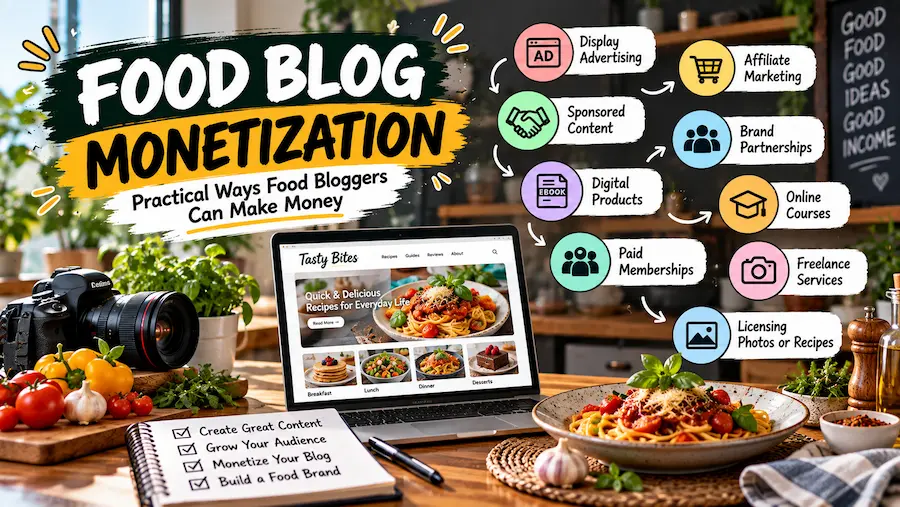
Food Blog Monetization: 9 Practical Ways to Make Money
Food blog monetization means turning your recipes, food guides, reviews, tutorials, or audience into income.
A food blog can make money in several ways, but not every method suits every site. Some work better with high traffic, while others depend more on trust, niche expertise, or a loyal audience.
The strongest approach is usually to build useful content first, then add monetization methods that fit how readers already use the site.
1. Display Advertising
Display ads are one of the most common ways food bloggers earn money.
Ads can appear inside recipe posts, between sections, in sidebars, or elsewhere on the page.
Income usually depends on factors such as:
- pageviews;
- visitor location;
- ad demand;
- page engagement;
- seasonality;
- the ad network used.
Ads are simple once set up, but they usually work better when a blog already has steady traffic.
The downside is that too many ads can make pages slower or harder to read, especially on mobile.
2. Affiliate Marketing
Affiliate marketing allows a food blogger to earn a commission when a reader buys something through a tracked link.
Food blogs can naturally recommend:
- cookware;
- kitchen tools;
- appliances;
- ingredients;
- meal-prep products;
- cookbooks;
- storage containers.
The best affiliate links are connected to something the article genuinely discusses.
For example, if a recipe uses a specific type of blender, linking to that product can be useful.
Adding unrelated products only to increase commissions can weaken trust.
3. Sponsored Content
Brands may pay food bloggers to create content featuring a product or service.
This might include:
- sponsored recipes;
- product demonstrations;
- ingredient features;
- social media content;
- branded tutorials.
Sponsored work can generate more income per project than display ads, but it requires clear communication with brands and proper disclosure.
Readers should know when content is sponsored.
A sponsorship should also fit the blog’s subject and audience. A paid promotion that feels unrelated can damage credibility.
4. Brand Partnerships
A longer-term brand partnership goes beyond one sponsored post.
A food blogger may work with the same company across several recipes, campaigns, videos, or seasonal promotions.
Brands often look for:
- relevant audience;
- consistent content quality;
- strong photography or video;
- professional communication;
- reliable publishing.
You do not always need a massive audience.
A smaller, focused food blog may still be useful to a brand if its readers closely match the product.
5. Digital Products
Food bloggers can create products that readers buy directly.
Examples include:
- recipe ebooks;
- meal plans;
- shopping lists;
- cooking guides;
- printable planners;
- baking guides;
- diet-specific recipe collections.
Digital products can be attractive because there is no physical inventory.
The main challenge is creating something readers actually need.
A useful product usually solves a specific problem rather than simply repackaging free blog posts.
6. Paid Memberships
A membership gives paying readers access to extra content or features.
That might include:
- exclusive recipes;
- weekly meal plans;
- private communities;
- cooking classes;
- advanced tutorials;
- member-only downloads.
Memberships can create recurring income, but they also create recurring work.
People will only keep paying if the membership continues to provide value.
7. Online Courses or Cooking Classes
A food blogger with strong knowledge in a particular area may teach it.
Possible topics include:
- baking;
- cake decorating;
- bread making;
- meal preparation;
- food photography;
- recipe development;
- beginner cooking.
Courses work best when the blogger has real experience and can teach a clear outcome.
A course should offer more than information readers could easily find in one short article.
8. Freelance Services
A food blog can also act as a portfolio.
Bloggers may offer services such as:
- recipe development;
- food photography;
- food writing;
- video production;
- social media content;
- editing;
- content creation for brands.
This can be one of the fastest ways to monetize a smaller blog because you do not need huge traffic.
You need proof that you can produce good work.
9. Licensing Photos or Recipes
Original food photography and recipe content may have commercial value.
Publishers, brands, media companies, or other businesses may pay to license content for specific uses.
Always make the terms clear.
A license may define:
- where the content can be used;
- how long it can be used;
- whether the use is exclusive;
- whether your name must be credited.
Do not give away broad usage rights without understanding what you are agreeing to.
Which Monetization Method Should You Start With?
That depends on what you already have.
If your blog has low traffic but strong skills, services may make more sense than ads.
If you have growing search traffic, affiliate content can fit naturally.
If you have high pageviews, display advertising may become more meaningful.
If you have a loyal audience, digital products or memberships may be worth testing.
If brands already notice your work, sponsorships and partnerships may be realistic.
Do not try to launch every method at once.
What Food Bloggers Should Avoid
Avoid monetization tactics that damage trust.
That includes:
- recommending products you do not understand;
- hiding sponsorships;
- filling every paragraph with affiliate links;
- placing so many ads that recipes become difficult to use;
- copying other bloggers’ products;
- promising unrealistic income.
A food blog makes money because readers find the content useful enough to return, trust recommendations, or buy something.
Protect that relationship.
Final Thoughts
Food blog monetization works best when income methods support the content instead of overwhelming it.
Start with the audience you already have, choose one or two methods that match how people use your site, and measure what actually works.
For many food bloggers, the long-term model is not one income source. It is a mix of ads, affiliate links, brand work, products, and services built around useful content and reader trust.